
 Home
 Commercial Ventilation Equipment
 Commercial Electrostatic Precipitator
 Commercial Kitchen ESP Hood
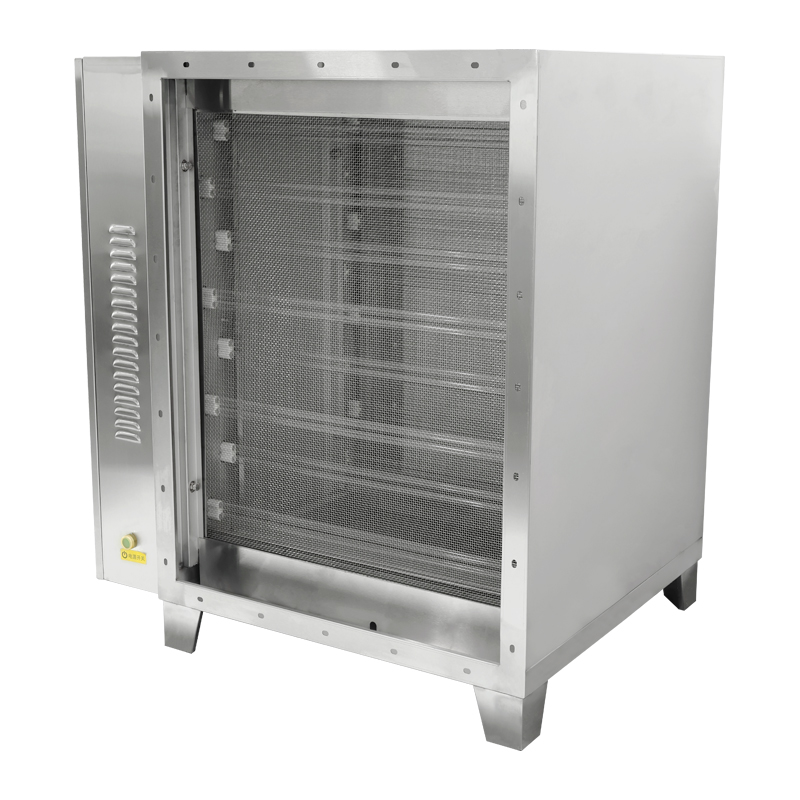 UV Deodorate Purifier
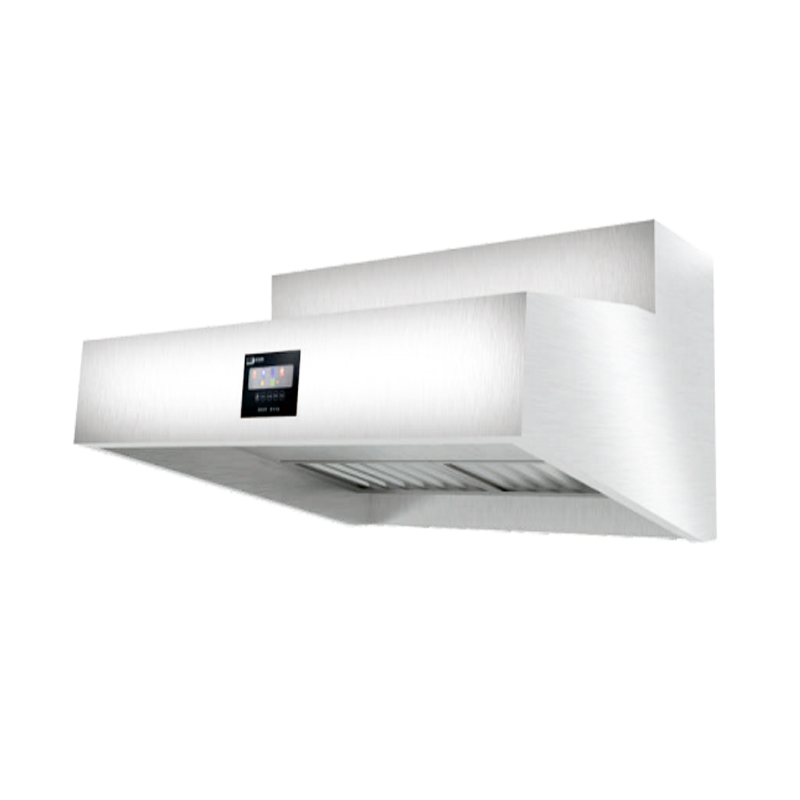 II Commercial Exhaust Hood
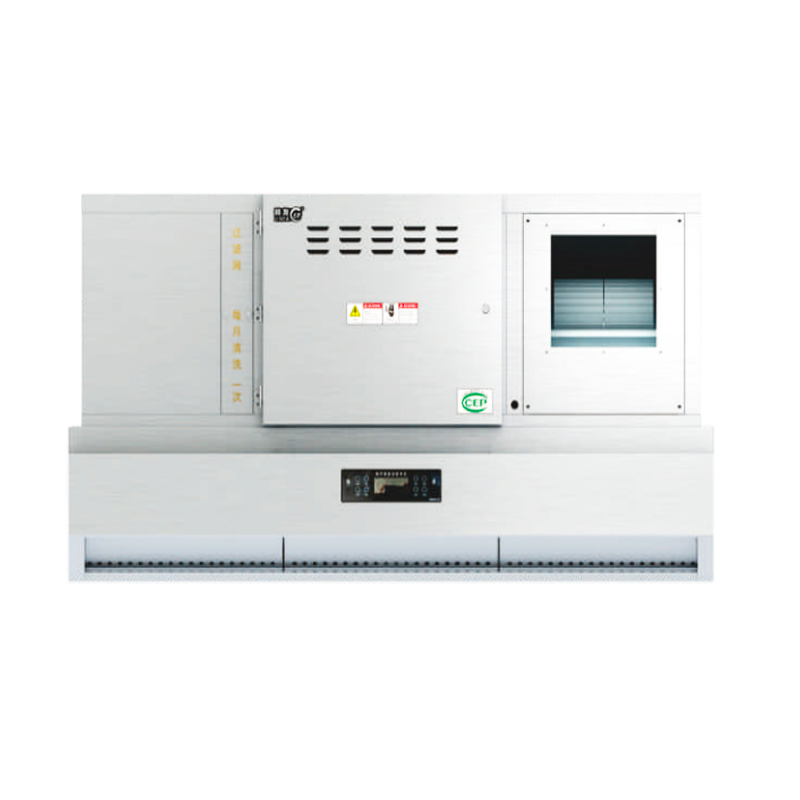 Commercial ESP Range Hood


High Static Pressure CKV Engineering for High-Rise & Basement Kitchens
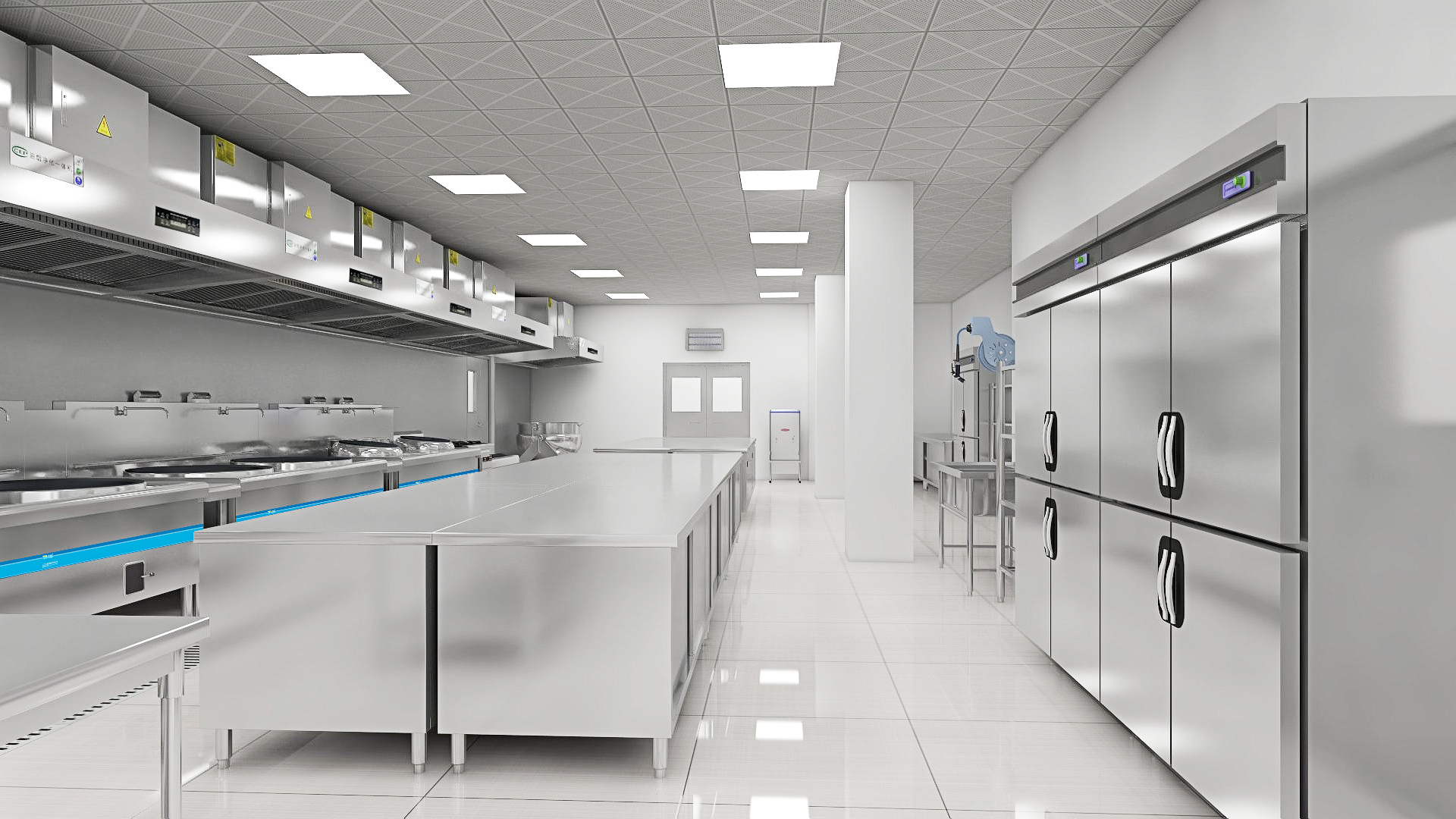
For HVAC contractors, MEP engineering consultants, and commercial facility managers designing Back-of-House (BOH) ventilation in high-rise towers or subterranean shopping malls, airflow calculations are rarely simple.
When a commercial kitchen is located on the ground floor or in the basement of a 30-story commercial complex, the exhaust ductwork must travel vertically or horizontally through hundreds of feet of tight risers, elbows, fire dampers, and filtration units before reaching the roof discharge point.
In these long-duct architectures, the primary enemy of air movement is Total System Static Pressure Loss (S.P.).
Deploying a standard, low-pressure utility fan or cheap inline duct blower in a high-resistance system inevitably leads to catastrophic operational failure:
Severe Smoke & Oil Backflow
The fan lacks the pressure "push" to overcome friction loss, causing dense cooking smoke, moisture, and carbon monoxide to spill out of the exhaust hood back into the kitchen.
Catastrophic Motor Burnout
Operating a fan against excessive friction forces the motor into continuous overload, leading to premature winding failure and costly downtime.
Severe Noise & Vibration
Forcing an undersized blower to spin at unsustainable RPMs generates extreme low-frequency vibration, irritating upstairs tenants and hotel guests.
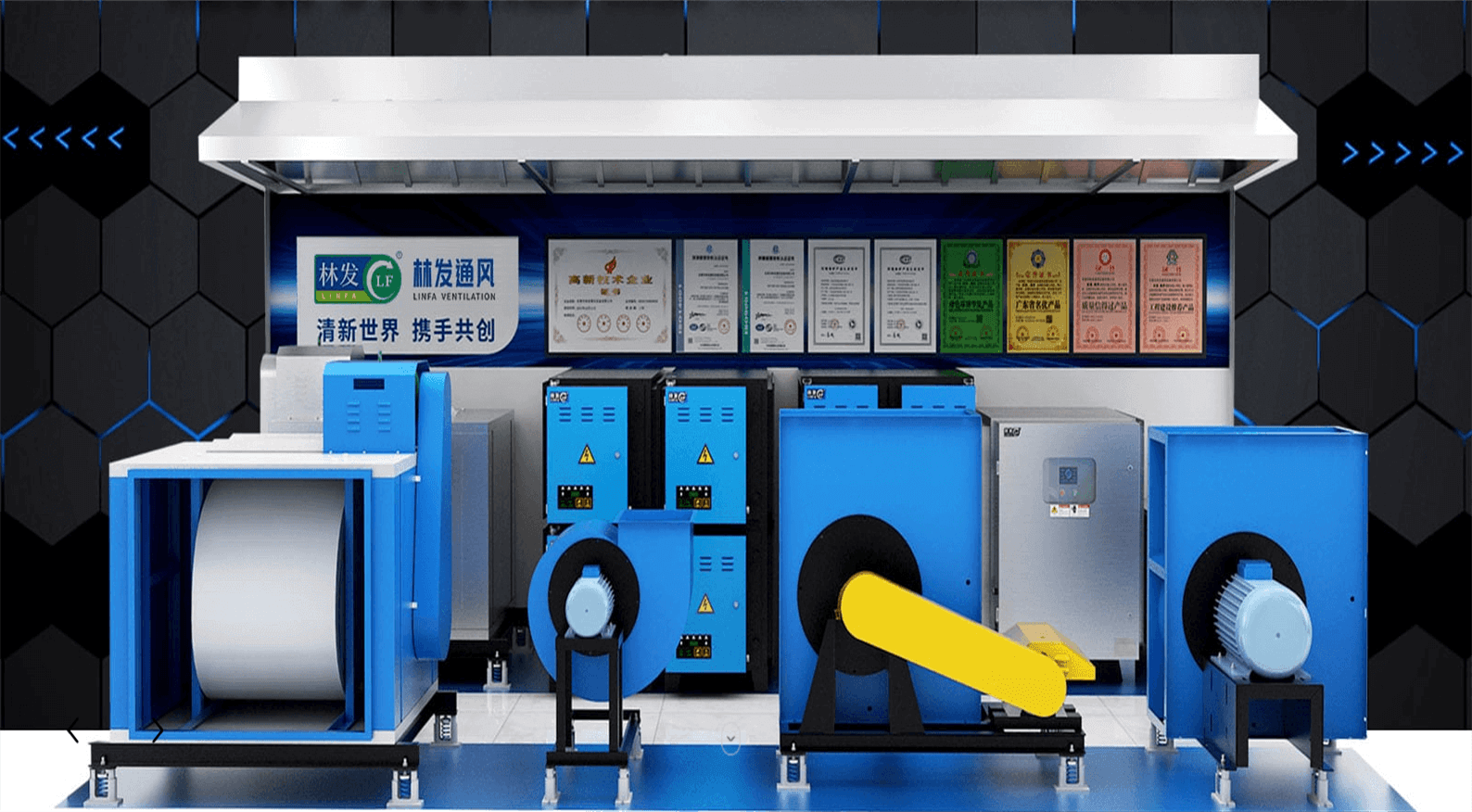
To guarantee rated exhaust Airflow Volume (CFM) across extended duct runs, engineers must specify a high-performance Commercial Kitchen Ventilation (CKV) system driven by a high-static centrifugal exhaust fan, an aerodynamic commercial exhaust hood, and a low-resistance electroStatic Precipitator (ESP).
(1)LONG-DUCT HIGH STATIC PRESSURE SCHEMATIC
BASEMENT HOOD --> MULTI-CELL ESP → 100m VERTICAL RISER WITH ELBOWS → (Captures Plume) (Pre-filters Air) (Generates 500-800 Pa Friction Loss)
CLEAN ROOF DISCHARGE →HEAVY-DUTY HIGH-STATIC CENTRIFUGAL BLOWER (Zero Smoke Backflow) → (Overcomes Extreme Friction Resistance)
In this engineering guide, we break down the physics of static pressure loss, duct friction calculations, and how to select the ultimate high-static centrifugal blower package for challenging commercial kitchen layouts.
1.The Physics of Long-Duct Resistance: Understanding Static Pressure Loss (Pa / in. w.g.)
Before selecting a centrifugal fan, HVAC engineers must perform precise duct head-loss calculations. Total Static Pressure (TSP) in a commercial kitchen exhaust line is the sum of resistance generated by every component in the airstream.
(1)Key Factors Driving Static Pressure Loss
Extended Duct Run Friction
Friction between moving grease-laden air and interior duct walls increases linearly with duct length. A 100-meter vertical duct riser imposes massive resistance.
Elbows, Transitions & Fire Dampers
Every 90-degree duct elbow adds equivalent length resistance (often equal to 3 to 5 meters of straight duct). Fire dampers, weather louvers, and transformation pieces further choke airflow.
In-Line Filtration Resistance
High-efficiency electrostatic precipitators (ESP) and baffle grease filters introduce localized pressure drops (typically 100 Pa to 250 Pa across dirty cells) that the fan must continuously overcome.
(2)TOTAL STATIC PRESSURE (TSP) CALCULATION FORMULA
TSP = Hood Resistance + ESP Loss + Duct Friction + Elbows/Dampers Loss
2.Core Equipment Strategy: Heavy-Duty Backward-Curved Centrifugal Blowers
When system resistance exceeds 400 Pa (1.6 in. w.g.), standard axial fans or forward-curved blowers become completely useless—they stall, slip, or overheat.
Long-duct, high-resistance commercial applications strictly require a heavy-duty backward-curved centrifugal exhaust blower.
(1)Why Backward-Curved Centrifugal Fans Dominate Long-Duct Systems
Non-Overloading Power Curve
Backward-curved steel impellers feature self-limiting horsepower characteristics. Even if static pressure fluctuates significantly due to dirty filters or weather conditions, the motor will not overload or burn out.
High Pressure Generation at High Efficiency
Backward-inclined blades convert kinetic energy into static pressure with hydraulic efficiency exceeding 80%, delivering upwards of 1,000+ Pa (4+ in. w.g.) of static thrust without excessive energy consumption.
Self-Cleaning & Grease-Resistant Impellers
Unlike forward-curved blades that trap thick grease in their tiny pockets (causing severe wheel imbalance and vibration), backward-curved impellers naturally shed grease via centrifugal force, maintaining dynamic balance over years of 24/7 operation.
(2)IMPELLER COMPARISON FOR HIGH-RESISTANCE DUCTS
Forward-Curved: Accumulates Grease → Loss of balance • motor burnout!
3. Optimizing the Upstream Airstream: Low-Resistance Hoods & ESP Units
A heavy-duty centrifugal blower is only as effective as the upstream equipment feeding it. To prevent compounding pressure drops, the hood canopy and filtration units must be aerodynamically optimized.
(1)System Optimization Strategy
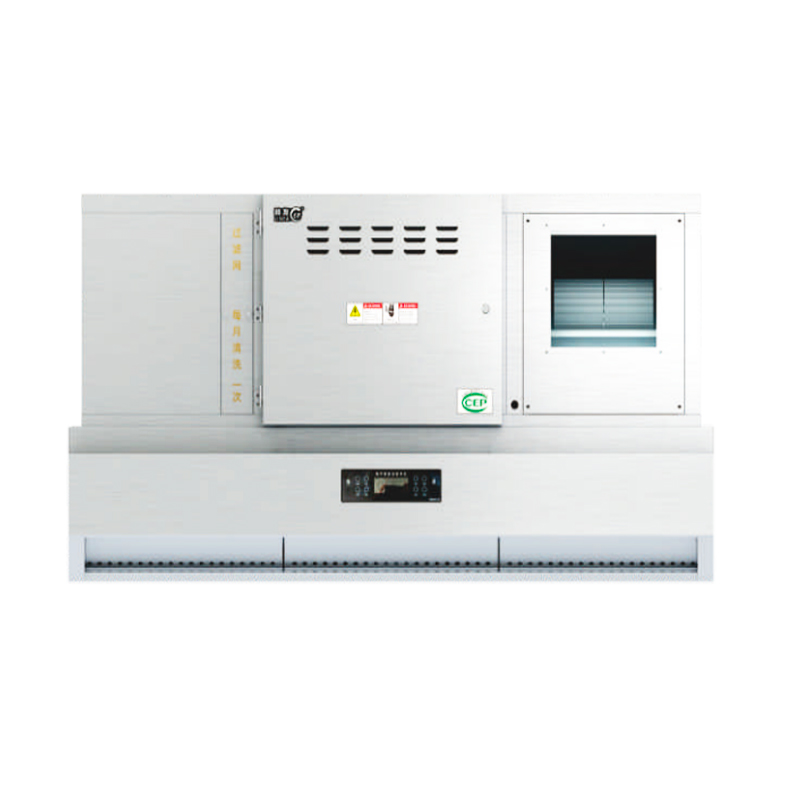
Aerodynamic Commercial Exhaust Hoods
Engineered commercial exhaust hoods feature smooth internal transition plenums and high-velocity, low-resistance stainless steel baffle filters that maximize grease capture while minimizing initial static pressure drop.
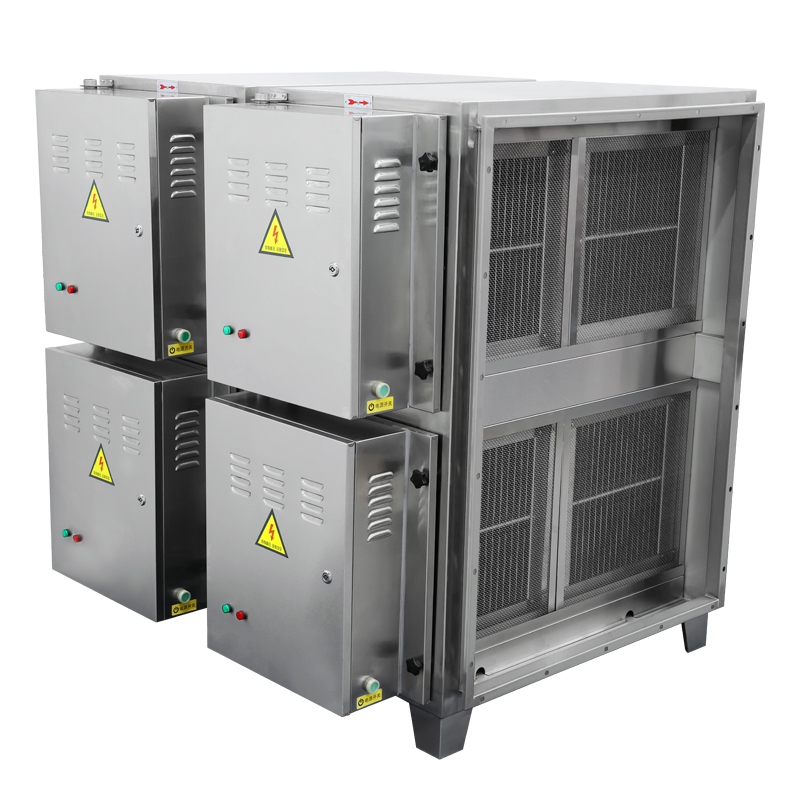
Low-Resistance Multi-Pass ESP Units
Sourcing a premium electrostatic precipitator (ESP) ensures that air flows smoothly through parallel honeycomb or plate ionization cells. A well-designed ESP unit provides up to 98% oil mist purification with a pressure drop of less than 120 Pa, allowing the centrifugal fan to reserve its pressure capacity for overcoming long duct friction.
VFD Variable Speed Drive Control
Pairing the centrifugal blower motor with a Frequency Inverter (VFD) allows HVAC technicians to fine-tune fan RPM during commissioning, matching exact duct friction conditions and compensating as filters gradually accumulate grease.
4. Engineering Comparison Matrix: Long-Duct Ventilation Specifications
To assist MEP consultants, building engineers, and HVAC contractors in selecting the correct CKV equipment for high-rise or subterranean projects, this matrix contrasts short-duct vs. long-duct engineering requirements:
Engineering Parameter | Short-Duct / Roof-Adjacent Kitchen | High-Rise / Basement Long-Duct Kitchen |
Typical Duct Length | < 10 Meters (Direct wall/roof penetration) | 30 – 150+ Meters (Through risers & elbows) |
Total System Static Pressure | Low (150 – 300 Pa / 0.6 – 1.2 in. w.g.) | High to Extreme (500 – 1,000+ Pa / 2.0 – 4.0+ in. w.g.) |
Recommended Fan Type | Utility Sets / Axial In-Line Blowers | Backward-Curved Heavy-Duty Centrifugal Blower |
Impeller Dynamics | Standard Forward-Curved or Axial | Heavy-Gauge Steel Backward-Inclined (Self-Cleaning) |
Grease Shedding Ability | Moderate | Superior (Centrifugal force prevents balance loss) |
Motor Drive Configuration | Direct-Drive or Belt-Drive | Out-of-Airstream Belt-Drive or Direct-Drive Enclosed |
Risk of Smoke Backflow | Extremely Low | High (If fan static pressure is miscalculated) |
Acoustic Noise Control | Standard In-Line Silencers | Heavy Acoustic Cabinet Enclosures & Anti-Vibration Springs |
5.Case Study Application: Subterranean Mall Food Court Ventilation
Consider a subterranean food court located 3 floors underground in a 40-story commercial tower:
The Challenge: Exhaust air from 5 heavy-cooking Asian wok stalls must travel 120 meters vertically to the main tower roof. Total static resistance (including 6 elbows, 2 fire dampers, and an ESP unit) was calculated at 780 Pa (3.12 in. w.g.).
The Solution: The MEP consultant specified a factory-assembled CKV package featuring:
Heavy-duty stainless steel commercial exhaust hoods with low-resistance baffle filters.
The Result: Zero smoke spillover inside the subterranean food court, whisper-quiet operation in upper retail floors, and 100% compliance with local municipal air discharge codes.
6. Conclusion: Conquer Static Pressure with Factory-Engineered CKV Packages
In high-rise commercial real estate and complex subterranean developments, kitchen ventilation cannot be left to guesswork. Miscalculating static pressure loss or specifying the wrong exhaust blower guarantees costly retrofits, tenant complaints, and catastrophic smoke backflow.
By deploying an aerodynamically balanced CKV package—combining low-resistance commercial exhaust hoods, high-efficiency electrostatic precipitators (ESP), and heavy-duty backward-curved centrifugal exhaust fans—you ensure powerful, reliable air movement across even the most challenging long-duct architectures.
Conquer duct friction, protect your exhaust motors from burnout, and deliver crystal-clear air across high-rise and basement commercial kitchens.
If you are an HVAC contractor, MEP consultant, commercial property engineer, or food court project manager seeking high-static CKV equipment packages, let's collaborate.
Leave a comment below or contact us directly as your premier commercial kitchen ventilation equipment manufacturer. We provide factory-direct, globally certified high-static centrifugal blowers, low-drop ESP units, and custom stainless steel exhaust hoods engineered to handle extreme pressure drops.
Contact our engineering team today for custom static pressure loss calculations, system CAD schematics, and factory-direct pricing for your project!